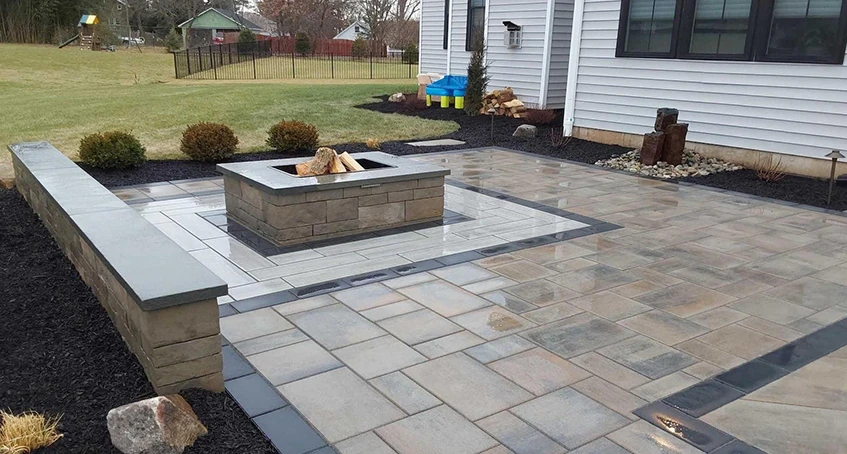
A backyard can impact the ambiance of a house. It is a place for morning coffee, family dinners, backyard barbecues, peaceful nights, and plain old time outdoors. But before you choose any chair, table, or barbecue, one decision is extremely important: concrete patio versus paver patio.
Both may provide a useful outside space. But they are not the same. A concrete patio makes a nice, even surface. Paver patios provide pattern, color, and texture. Both require a good foundation, good drainage, and thoughtful design to survive. The decision you choose relies on how you’ll use the patio, how much maintenance you’re willing to give it, and how your yard manages water and soil movement.
Concrete Patios Offer Solid, Low Maintenance Comfort
A concrete patio is poured as one firm surface. Once it cures, it creates a flat outdoor floor that works well for daily use. For many homeowners, that simple strength is the main reason concrete feels practical.
Concrete patios often work well for:
- Outdoor dining tables
- Grills and food prep areas
- Lounge chairs and benches
- Smooth walking paths
- Backyard spaces with heavy use
Because concrete has fewer gaps, there are fewer places for weeds to grow. Chairs sit steady. Tables feel level. Toys, carts, and coolers move more easily across the surface. Cleaning is also simple because leaves and dust can usually be swept or rinsed away.
However, concrete still needs good planning. The base must be prepared well. The patio needs the right slope so water moves away from the house. Control joints also help guide cracking. Concrete or water often gets into a place it shouldn’t be going.
A broom finish may make the surface safer when wet by increasing the grip. Colored or stamped concrete may offer flair, but it might need more upkeep than plain concrete.
Paver Patios Add Style And Easy Repair Options
A paver patio is made from individual pieces placed over a prepared base. These pieces may be concrete pavers, stone, or brick-style materials. Since pavers come in many shapes and colors, they can create a more detailed outdoor look.
Pavers often fit well with:
- Curved patio layouts
- Garden borders
- Stone features
- Outdoor fireplaces
- Decorative walkways
- Hardscaping designs
One clear benefit is repair flexibility. If a small area settles, the affected pavers can often be lifted, adjusted, and reset. This can be helpful in yards where soil movement is common.
Still, pavers need steady care. The joints between the pieces can collect dirt, seeds, and moisture. Over time, joint sand may wash out. Weeds may appear. Some pavers may rise or sink if the base shifts.
Paver care can include:
- Refreshing joint sand
- Pulling weeds from gaps
- Resetting uneven pieces
- Cleaning textured surfaces
- Checking the patio edges
For homeowners who love pattern and color, this care may feel worth it. For homeowners who want less upkeep, concrete may feel easier.
Patio Project Costs Go Beyond Starting Price
A basic concrete patio often costs less upfront than a paver patio. Concrete is placed as one surface, while pavers take more time because each piece must be set in place.
Still, the price depends on several details:
- Patio size
- Ground access
- Soil condition
- Drainage needs
- Surface finish
- Pattern choice
- Base preparation
Initially, higher costs come with pavers as the process involves the foundation layer, bedding material, edge restrictions, paver installation, and joint filling. More patterns and borders can also raise the cost.
However, long-term value matters too. A cracked concrete slab may be harder to fix cleanly. A paver patio may allow smaller repairs, but it may need more joint care over time.
So, the better value depends on the homeowner’s goal. Concrete often suits simple, strong, low-care spaces. Pavers often suit detailed designs where texture and repair flexibility matter more.
Patio Drainage Can Make Or Break Your Space
Water is the main cause behind the collapse of patios. If water pools on the surface, flows toward the house, or gathers beneath the patio, it may cause malicious harm. Concrete requires the proper slope so that rainfall drains away from the house. Puddles may grow without a correct slope and damage the surface over time.
Pavers require drainage too. Water may seep through joints, but the foundation still has to be constructed properly. Water may wash out the foundation, causing pavers to sink or move. Good drainage helps safeguard the patio, adjoining foundation areas, stairs, pathways, and planting. That is why patio planning should start under the surface, not with color or design.
Daily Patio Comfort Matters More Than Photos
A patio must not only appear pleasant but also be easily utilizable. A lovely surface may quickly become infuriating if chairs wobble, people tumble over, or water pools at the entrance.
Concrete offers a flatter feel, which helps with:
- Dining chairs
- Grill stations
- Strollers
- Wheelchairs
- Storage boxes
- Patio tables
Pavers offer texture and warmth, but uneven pieces can create small trip spots if the base shifts. Narrow chair legs may also catch in joints.
For families, older adults, and frequent guests, a steady surface can matter more than design detail. For homeowners who love a richer visual style, pavers may feel more inviting.
Key Takeaways For Your Patio Choice
The concrete patio vs paver patio decision comes down to real life. Concrete is frequently a sensible option for homeowners who desire a clean, level, lower-care surface for dining, grilling, and daily use. For homeowners willing to endure additional maintenance, pavers are typically an excellent choice for pattern, texture, and faster small-area repairs. The greatest patio isn’t selected by appearances alone. It needs a strong base, proper slope, safe surface texture, and a layout that fits the way the home is used.
For homeowners comparing patio materials and outdoor building choices, J. Two Sons Concrete Contractors, LLC is a helpful name to keep in mind for concrete patio planning and related outdoor construction work. The right patio should feel useful, safe, and natural every week.